History of Tequila
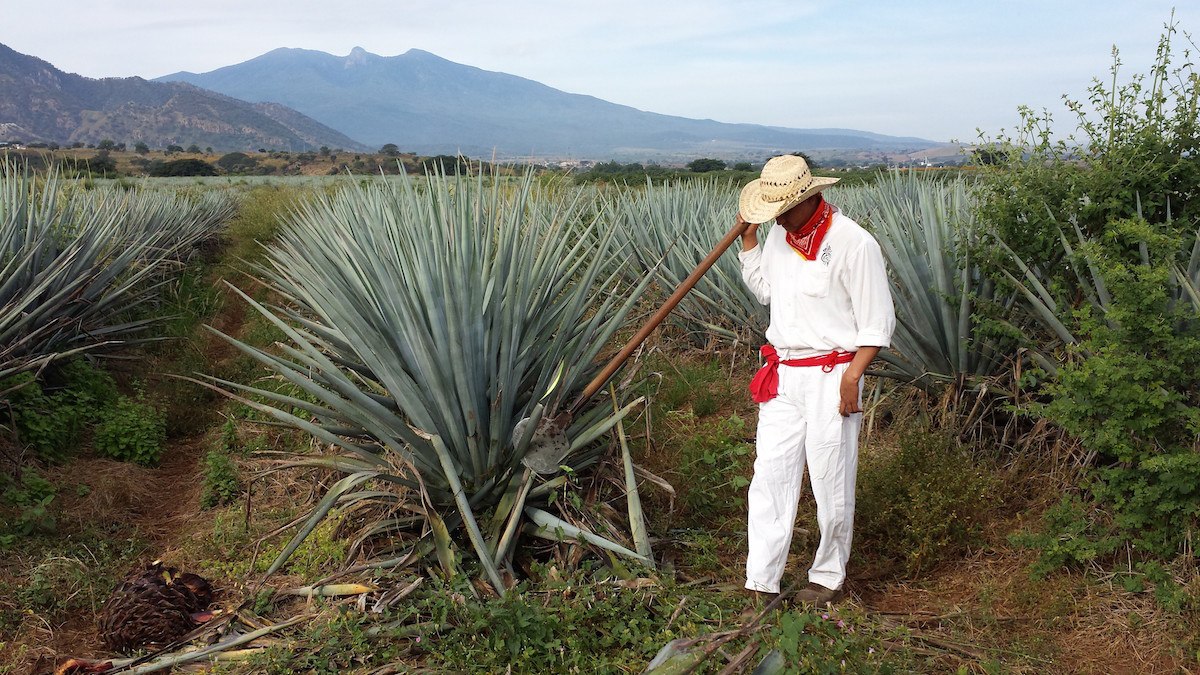
Tequila is a distilled spirit produced in a small region of Mexico. It is produced from distillation of fermented mask obtained from the heart or a plant known as “Agave Azul” or blue agave. This heart, similar to a giant pineapple, it is also known as “mezcal”. In nahuatl means “House of the Moon” and is used to signify the marrow, essence, center, etc. Tequila is a product of the meeting of two worlds. It uses a technique originated in the European continent to transform a raw material, which has been cultivated since ancient times and typical of the American land.
Tequila name comes from an ancient and dynamic town located about 50 kilometers north of Guadalajara, on the way of this city and to other well-known place, the port of San Blas de Nayarit, at the Pacific Coast of Mexico. During colonial times, blue agave thrived in the lands surrounding the county of Tequila. Many large and small factories sprang up to produce the prestigious liquor, known earlier simply as “the wine of Tequila Mezcal”.
Nowadays, for many reasons Tequila is considered the “Mexican by excellence” beverage, and with the mariachis and charros of Jalisco, exemplifies abroad the archetype of the Mexican music and way of living of Mexican people.
In fact, a mariachi musician dressed in the traditional ensemble, traje de charro, would not be considered drinking anything else but Tequila.
With Mexican independence in 1821, Spanish liquors started to face with greater difficulties reaching Mexico. This was the opening for Tequila producers to increase their sales in Guadalajara and to start marketing Tequila in Mexico City and the entire centre of the country.
During the first half of the 19th century some mills had acquired a certain importance and the producers were starting to exert notable political influence.
At this time, thanks to the easy access to the port of San Blas, it was again possible for Tequila sales to increase, this time due to gold-seekers and miners. In 1849 gold was found in current day California without considering that, just one year earlier, the land had been wrenched from Mexico by the Yankees.
As Mexico endured its civil war in 1857, the war which would end the old social order inherited under Spanish domination, Tequila producers already knew what their industry needed. They continued to support the liberal cause until it triumphed in 1867. It was a distinguished Tequila producer who then assumed the governorship of the State of Jalisco following the defeat of the French whom Napoleon III had sent in support of the conservatives.
Tequila’s main enemy at the end of the 19th and beginning of the 20th century was the railroad in the USA which easily transported European liquors from coast to coast. This problem was exacerbated by Mexican high society which retained a preference for French products.
Only among the masses did one find regular consumers of the traditional distilled drink but, even so, Tequila consumption grew considerably.It was the Mexican Revolution that foretold a new attitude that resounded in favor of Tequila.
With the overthrow in 1911 of the lengthy dictatorship headed by General Porfirio Diaz, the conflict became a thing of the past and the whole country looked for ways to strengthen the sense of Mexican nationhood.
Drinking Tequila instead of imported distilled liquors was one of these gestures. What’s more, even the government consciously favored the image of Tequila, almost as a national symbol.
As well, in the 30s and 40s, the successful Mexican film industry contributed beyond measure to Tequila’s popularity by creating a misleading stereotype of what it meant to be Mexican.
In addition to movies, many songs then in vogue had much to do with the growing fame of the drink. It also helped that a popular saying named Tequila as the best medicine against an epidemic of Spanish influenza which scourged northern Mexico in 1930. In order to meet the demand, Tequila was provided in small bottles fabricated in the industrial city of Monterrey, rather than being distributed in bulk in cumbersome barrels.
Likewise, the oil boom that arose at that time off the Gulf Coast of Mexico boosted the consumption of Tequila thanks to handy half-litre bottles which were easy to handle and transport – even in the back pocket of the loose-fitting trousers which were the style then and so commonly seen on cinema screens.
In 1940 the Tequila industry was ready to supplant whisky which had ceased to reach the USA due to WWII. Tequila exports reached unexpected levels.
The drop in sales was similarly steep when the armistice unexpectedly arrived and the industry had to make a concerted effort to increase its domestic market and look for sales in Europe and South America.
From 1950 the Tequila production chain initiated considerable technical improvements. Many factories, without detriment to quality, attained high yields and levels of hygiene. Some brands proved more accessible to the common palate due to their lower alcohol content.
It was found that the optimal region to grow blue agave could be expanded, without harm to the product, which allowed the increasing demand to be duly satisfied.
Tequila was first distilled in the 1500-1600’s in the state of Jalisco, Mexico. Guadalajara is the capital of Jalisco and the city of Tequila was established in about 1656. This is where the agave plant grows best.
The agave belongs to the lily family and has long spiny leaves. The specific plant that is used to make tequila is the Weber blue agave. It takes 8-12 years for the agave to reach maturity. During harvest, the leaves are cut off leaving the heart of the plant or piña which looks like a large pineapple when the jimadores are done. The harvested piña may weigh 200 pounds or more and is chopped into smaller pieces for cooking at the distillery.
Tequila was first imported into the United States in 1873 when the first load was transported to El Paso, Texas. In 1973 tequila sales in the US topped one million cases.
There are two basic types of tequila, 100% blue agave (cien por ciento de agave) tequila and mixto. The 100% blue agave tequilas are distilled entirely from the fermented juice of the agave. All 100% agave tequilas have to be distilled and bottled in Mexico. If the bottle does not say 100% blue agave, the tequila is mixto and may have been distilled from as little as 60% agave juice with other sugars.
Tequila’s name was adopted from the region that gave birth about two centuries ago.
Grades of tequila:
Blanco: 100% agave tequila that is unaged and untreated with additives.
Reposado: 100% agave, “rested” tequila that has been stored in oak between two months and one year.
Anejo: 100% agave, aged tequila that has been stored in oak at least one year.
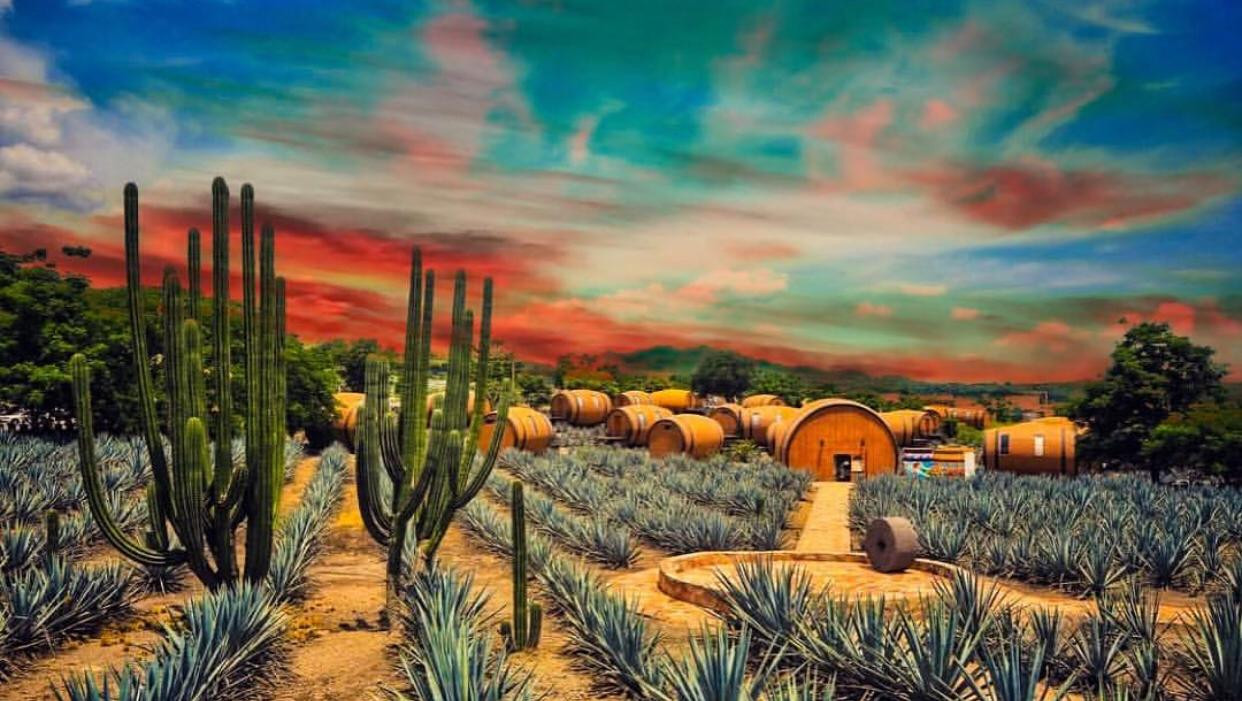
As the tequila is aged in wooden barrels, usually oak, it becomes smoother, with a woody taste and golden color. Aging may disguise the agave flavor and few tequilas are aged longer than three to four years.
Each distillery in Mexico is assigned a NOM number that shows which company made or bottled the tequila.
The distinction between mezcal and tequila is this: Tequila must only use blue agave, while mezcal can use any type of agave.
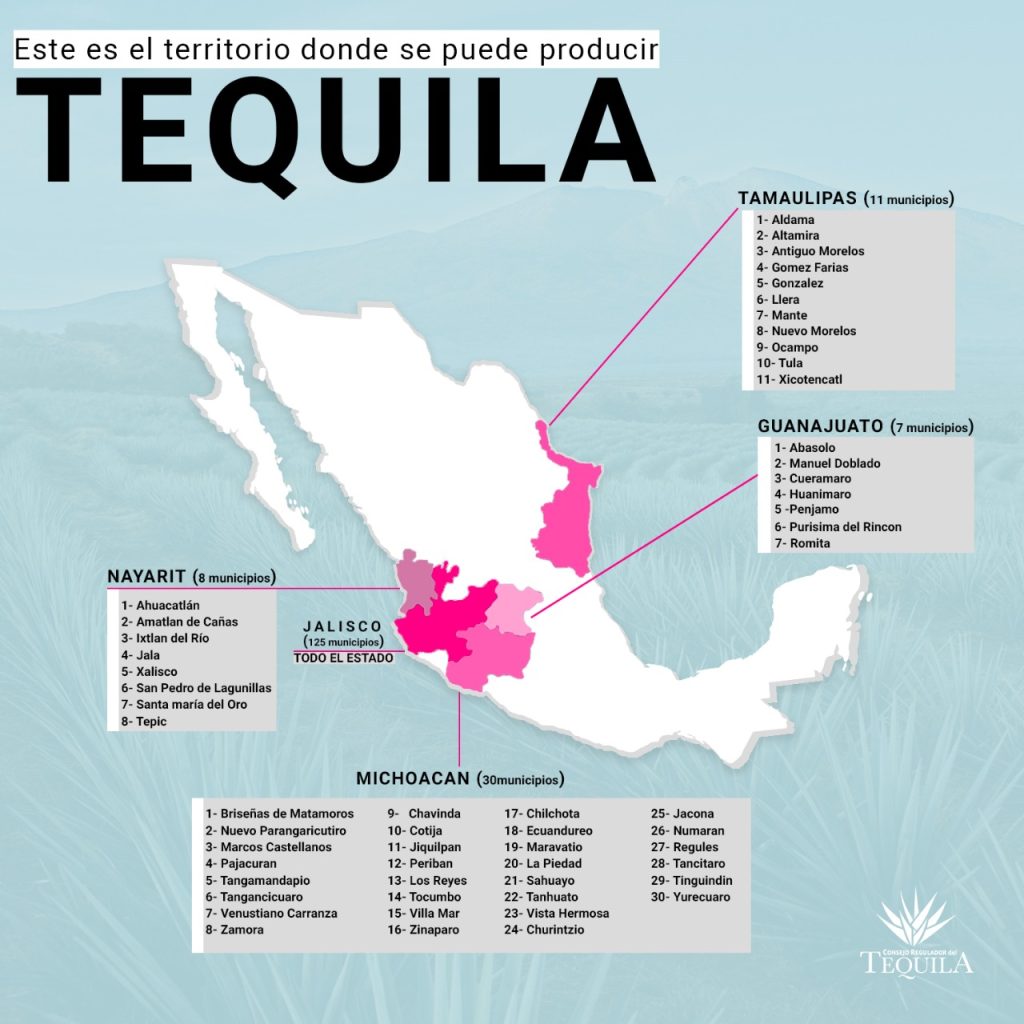
Mexican law mandates that tequila can only be produced in the state of Jalisco and limited municipalities in the states of Guanajuato, Michoacán, Nayarit, and Tamaulipas.